Edina — The Artist Who Said Yes
- Loli Lanas
- Nov 29
- 6 min read







Edina — The Artist Who Said Yes
(A Story of Friendship, Courage, and the Power of Art)
I met Edina Seleskovic at The Corcoran School of Art in Washington, D.C. Our studios were side by side, and I would watch her walk past carrying her enormous sculptures with the kind of confidence only a young artist with a clear purpose possesses.
Beautiful Bosnian. Tall. Brilliant. And an absolutely INCREDIBLE belly dancer — Edina stood out from the very beginning. She carried herself with a presence you couldn’t ignore, focused, determined, and fearless in ways that made the rest of us stop and take note.
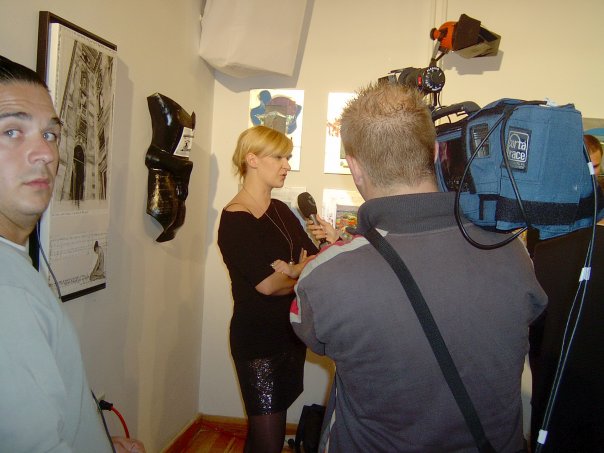
During our senior year, Voice of America followed her with cameras for an entire semester. In many ways, she had one of the first “reality shows.”
That was Edina — always ahead, always breaking form, always living one step beyond the ordinary.
We became friends easily — two young artists learning how to dream big. Every Thursday night after the weekly art shows, we stood at the corner of 17th Street NW and New York Avenue NW, eating cheese and drinking wine out of plastic cups, and imagining the shapes our futures might take. We were navigating the world with sketchbooks in our hands and ambition in our hearts — believing anything was possible as long as we stayed brave and a little wild.
After graduation, she moved to New York to become an artist, and of course she did exactly that.
During those years, she returned to D.C. to work at Kramers & Afterwords in Dupont Circle. Each time, I picked her up at the bus station, brought her home, and the next morning dropped her off at work — in style — because back then, I drove a Jaguar.
So many tiny memories that still glow. During those years, I was quietly battling some cancerous cells and undergoing chemo. Those small rituals — picking her up at the bus stop, driving her to work, sharing stories late into the night — gave me strength. They grounded me. In a strange, beautiful way, she became part of my survival. She needed me, and I refused to let her down. She became part of my support system long before either of us realized it.
Years passed. She moved back to Bosnia to build a life and family. From afar, I watched her continue doing incredible, visionary things. We stayed connected across oceans, as true friends do.
One day she called me:“Send me your paintings,” she said. “There’s an art and culture residency in Kastav, Croatia. I want to nominate you.”
I submitted my work, and months later received a letter from the Cultural Office of Kastav: I was accepted.I was elated. I packed my paintings, boarded a plane, and when I arrived, Edina and her husband picked me up at the airport.
We drove four hours to Kastav with the famous Andean song “El Cóndor Pasa” playing in the car — how perfect. Thanks to Zlatko, Edina’s husband, who owns Kamaleon Radio in Tuzla, the music filled the space like a bridge between worlds. He chose the song intentionally so I would feel at home in a foreign land.
I will never forget that drive — the haunting flutes soaring through the speakers as I looked at the rolling, mountainous landscape. The Andes blending with Croatia.
A perfect mix of our worlds.
We arrived, found the apartments provided by the city, and immediately began installing my exhibition. It felt like a dream.
But opening night came… and no one showed up. Not a single person.
The next morning, Edina needed to return to Bosnia. She hugged me and said:
“Enjoy the two weeks. Meditate. Have fun.”
I watched her car disappear into the distance and felt suddenly very alone — a foreign artist in a small town where, quietly, I wasn’t welcome. I didn't yet know that my presence had stirred controversy; some believed the residency should have gone to a local artist.
So instead of hosting me, the mayor sent me to the kindergarten. And that is where everything changed.
Working with those children, I realized something powerful: I could teach art. I could connect children through creativity. And there was a need for art with purpose.
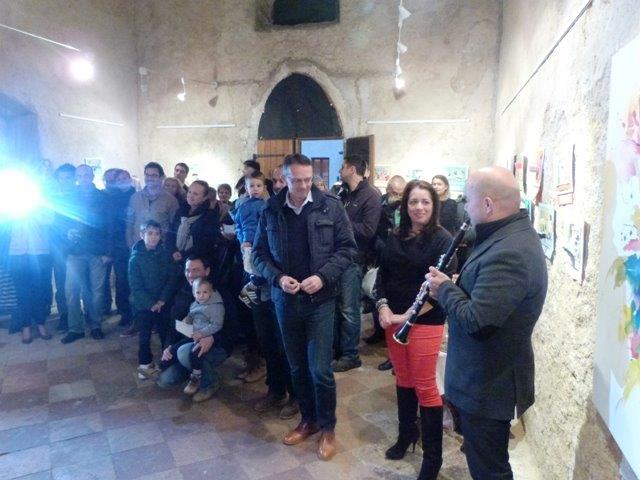
During those two weeks, something unexpected happened. I made incredible friends. The children and I ended up in the local news. And at my closing ceremony, the entire town came.
Somehow, in a place where I first felt rejected, I became known as the Ecuadorian who fell in love with Kastav.
All because I followed Edina’s advice: “Have fun, relax, and think about what you want to do.”
In that tiny kindergarten, surrounded by crayons, questions, and small hands eager to create, I discovered the purpose that would shape the rest of my life: art as connection, art as education, art as healing, art with meaning.
That was the true birth of Projekt Postcard.
Years later, through that work, I met Nicole Stott at an installation I had at Dulles Airport. Our first projects together were Postcards to Space and The Space Suit Art Project, and naturally, I thought of Edina.
I mailed her a box with the assignment. She opened it — and immediately ran with it.
She brought the project to the Children’s Hospital in Tuzla — a place she had never entered before. What she found broke her heart. The building was deteriorating, and the children weren’t receiving the level of care every child deserves.
She left devastated.
Around that same time, I remembered something Majid’s uncle — Uncle Jack, whom I loved as if he were my own blood — once told me:
“The most difficult word to say in life is yes. Because when you say yes, you commit — truly commit — to whatever follows. That’s why the easiest word is no.”
That wisdom stayed with me. And it’s the reason I believe Edina is extraordinary.
Most adults say no when something is uncomfortable, inconvenient, or overwhelming.
But Edina said yes.
Yes, to the children in Tuzla.
Yes, to the heartbreak.
Yes, to responsibility when others turned away.
She said yes when it mattered most.
And she acted.
She launched a fundraising campaign. Mobilized the city. Approached companies for sponsorships. Organized a major event.
The only thing she asked from me and Nicole was a video — and we sent it with love.
The event was held at the largest hotel in Tuzla, and the children’s postcards became the heart of the auction.
In a city scarred by war, where people were skeptical after past failed fundraisers, something miraculous happened:
They raised over $80,000.A transformative amount for Bosnia.
The money went directly to restoring the hospital’s infrastructure.A dream became real.Because Edina said yes.
Later that year, she invited Nicole and me to Tuzla for the Festival Savremene Žene — a major cultural gathering she produces each year, bringing together women leaders, innovators, artists, and visionaries from across Europe.
We spoke about our projects, and the people of Bosnia received us with grace, warmth, and deep kindness. We were even given the Key to the City — something I will never forget.
Together, we took children’s artwork to space. And through Edina’s Think Freedom initiative, we helped children explore the meaning of freedom — to see beyond borders, beyond fear, beyond limitations.
So when the postcards were sent to the International Space Station, they carried far more than drawings.
They carried messages of freedom — written by children from nine different countries — for astronauts to read.
Not just images, but voices. Not just colors, but truths. Not just art, but hopes for a better world.
To ask a child what freedom means… to have them reflect on dignity, humanity, and possibility…that stays with them.
And perhaps — I truly believe this — if they hold onto that thought as they grow, they will become adults who help shape a world where freedom is not a privilege, but a right.
A world where compassion rises. Where borders soften. Where imagination leads us forward.
This is a story about friendship for life — the kind of friendship that lifts you up, challenges you to grow, and believes in your dreams even when they sound impossible.
Edina is larger than life. Her belief in me carried me through doubts, healing, and transformation.
I don’t ever want to forget this story.
Because friendships like hers — and Nicole’s — don’t just change your life. They change what you believe is possible.
In Bosnia, we were three focused women with one idea and a shared mission. Three different countries. Three different journeys. One purpose.
And through those powerful connections, children’s artwork traveled to space. Their voices became messages of freedom. Their imaginations stretched beyond their circumstances, beyond their limits, beyond their horizons.
Together, we helped them see a bigger world — and believe they belonged in it.

Comments